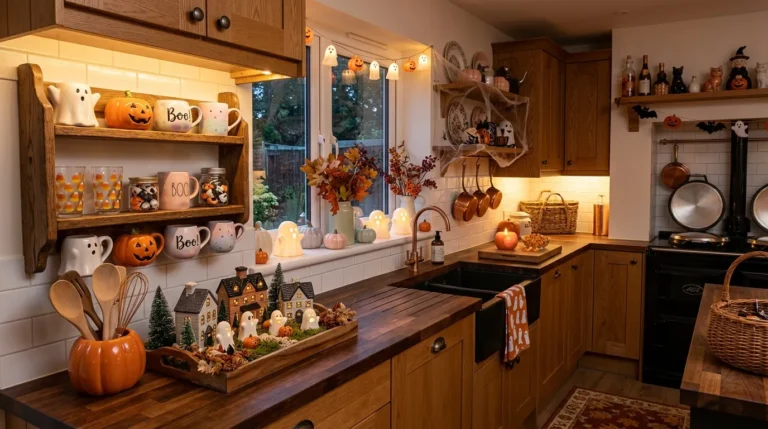
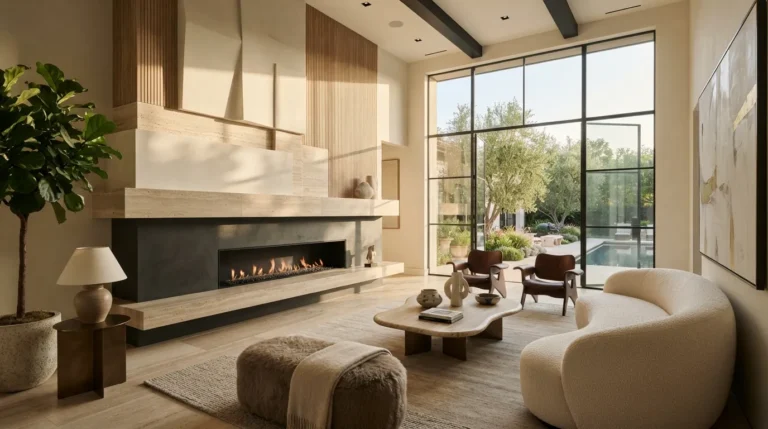
22 Amazing Mirror Decor Ideas For A Spooky Halloween Home
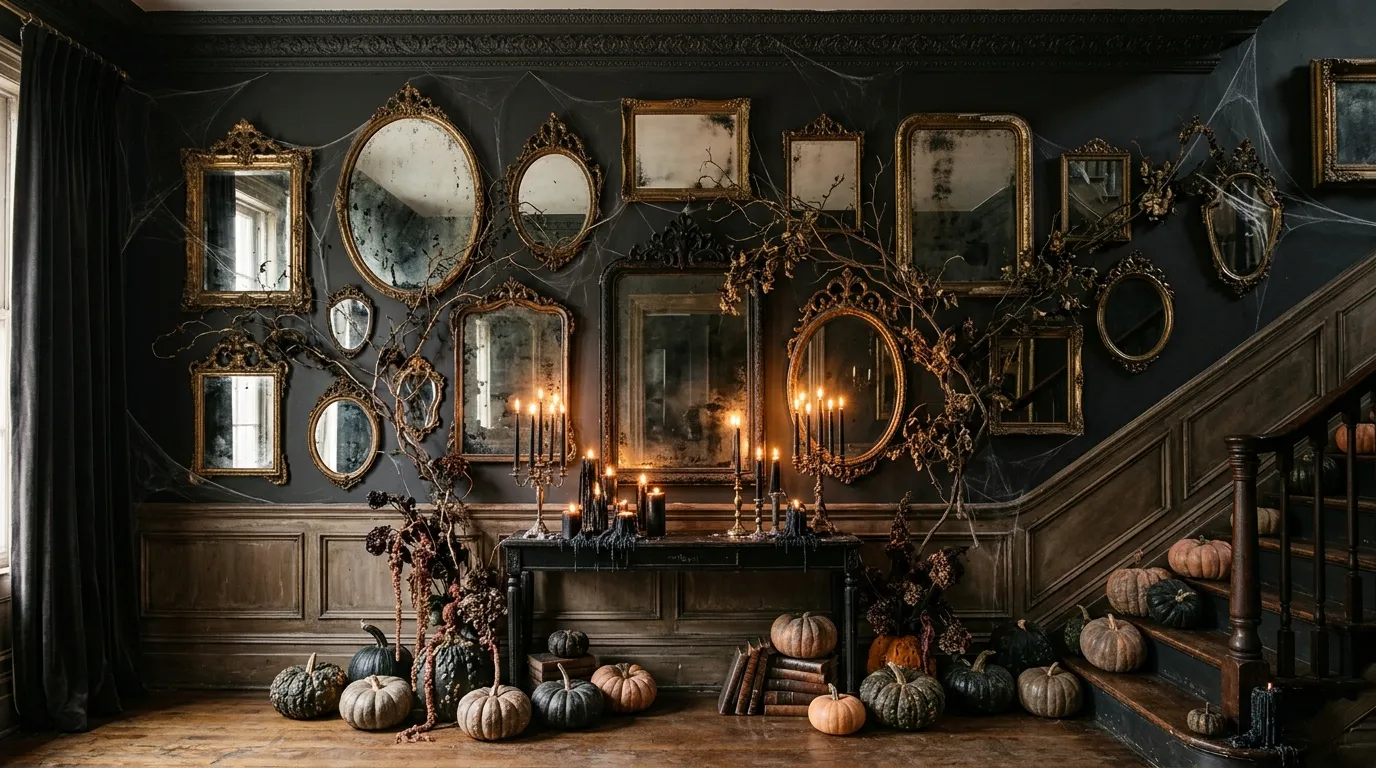
Small square footage demands strategic visual trickery. Mirrors operate as secondary windows, bouncing natural light into shadowed corners and dissolving rigid perimeter boundaries.
Achieving spatial expansion requires more than slapping glass against drywall. Thoughtful reflection curation considers sightlines, frame scale, and surrounding material palettes to forge genuine architectural depth. These principles are also important in interior design, where thoughtful layouts can make compact spaces feel more open and functional.
Key Takeaways
- Reflect exterior garden vistas.
- Double perceived room proportions.
- Offset low ambient illumination.
- Anchor heavy frames securely.
Amazing Mirror Decor Ideas: The Geometry of Reflective Spatial Design
A mirror reflects everything in its trajectory, meaning misplaced glass duplicates visual clutter rather than openness. Always position reflective planes opposite clean sightlines, garden foliage, or architectural molding.
Scale dictates optical effectiveness. Petite frames accentuate wall boundaries, whereas oversized expanses trick the human eye into perceiving unbroken spatial flow beyond the actual physical perimeter.
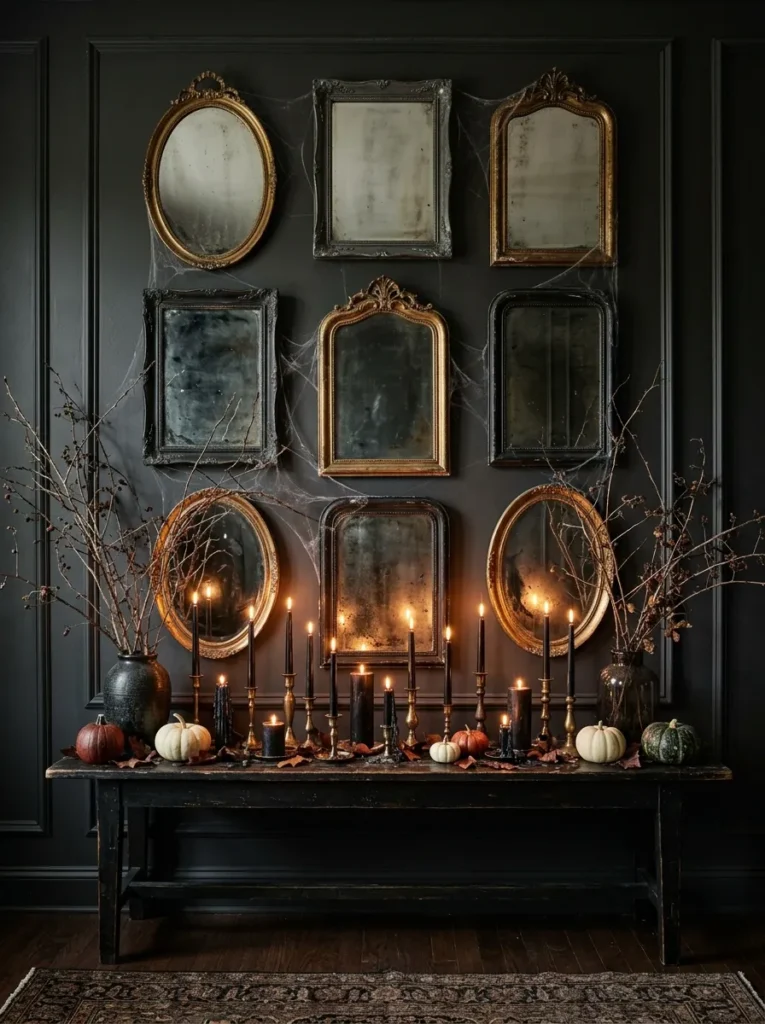
1. Gallery Grid Wall
- Uniform square matte frames
- Tight three inch spacing
- Geometric matrix alignment
The Look and Technique:
Combining nine or twelve identical square mirrors in a geometric grid establishes architectural discipline. The repetitive reveals between frames mimic classical French casement windows while breaking expansive blank drywall.
Best Suited For:
Narrow dining spaces lacking exterior windows where repetitive reflections suggest structural depth.
Pro Stylist Tip:
Utilize a laser level and cardboard templates to ensure millimeter-accurate spacing between every frame edge.
2. Leaning Floor Length
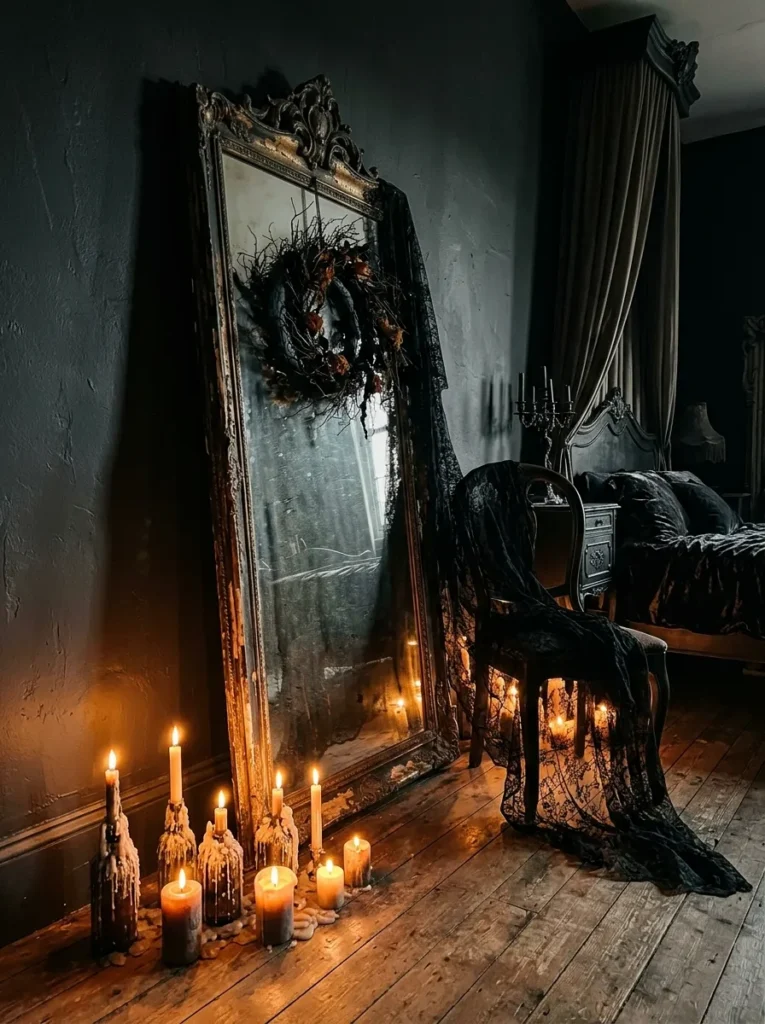
- Substantial reclaimed timber frame
- Intentional seven degree recline
- Full height vertical sweep
The Look and Technique:
An oversized floor mirror propped loosely against a corner removes visual tension. The gentle upward recline reflects upper wall crown molding and ceiling light rather than floor clutter, lifting cramped vertical proportions.
Best Suited For:
Compact primary bedrooms and awkward hallway ends that require immediate visual extension.
Pro Stylist Tip:
Anchor the top rail to wall studs using concealed anti-tip aircraft cables for safety without altering the leaning angle.
3. Arched Entry Accent
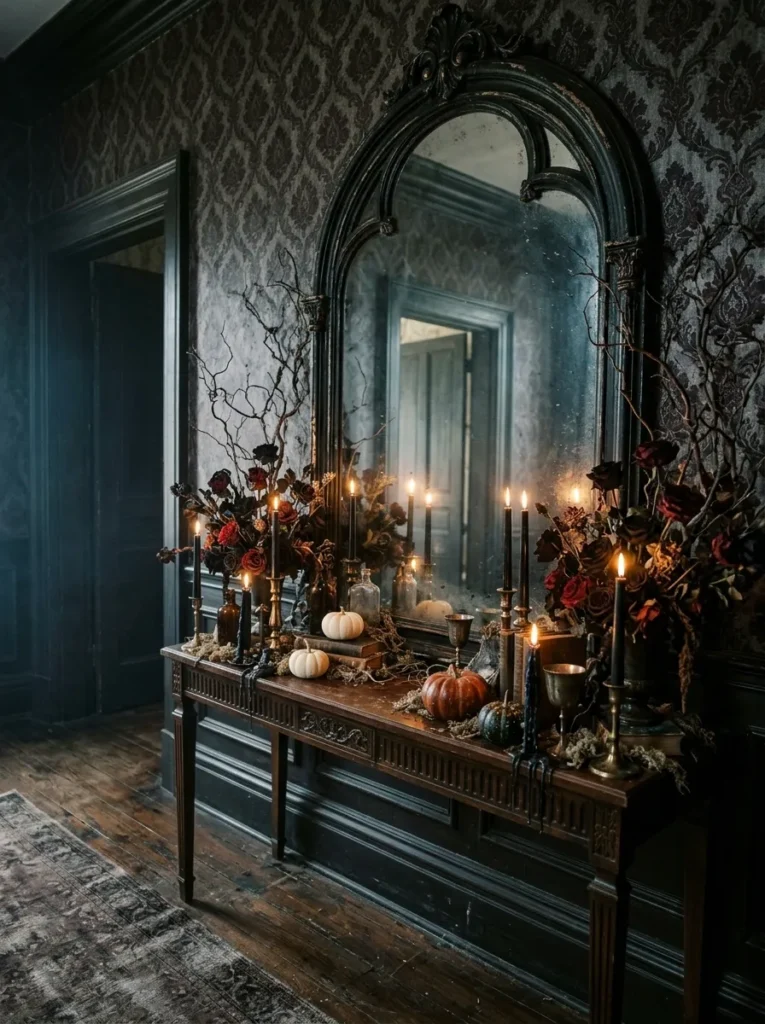
- Cathedral architectural silhouette
- Slim blackened iron mullions
- Curved crown illusion element
The Look and Technique:
Arched silhouettes soften severe 90-degree doorways and boxy hallways. The curved crown introduces the illusion of antique stone masonry portals, leading the eye upward into vertical volume.
Best Suited For:
Constricted foyer vestibules requiring immediate warmth and soft transitional architecture.
Pro Stylist Tip:
Hang the arch center at 60 inches from the floor to align with standard adult eye-level horizon lines.
4. Sunburst Over Mantel
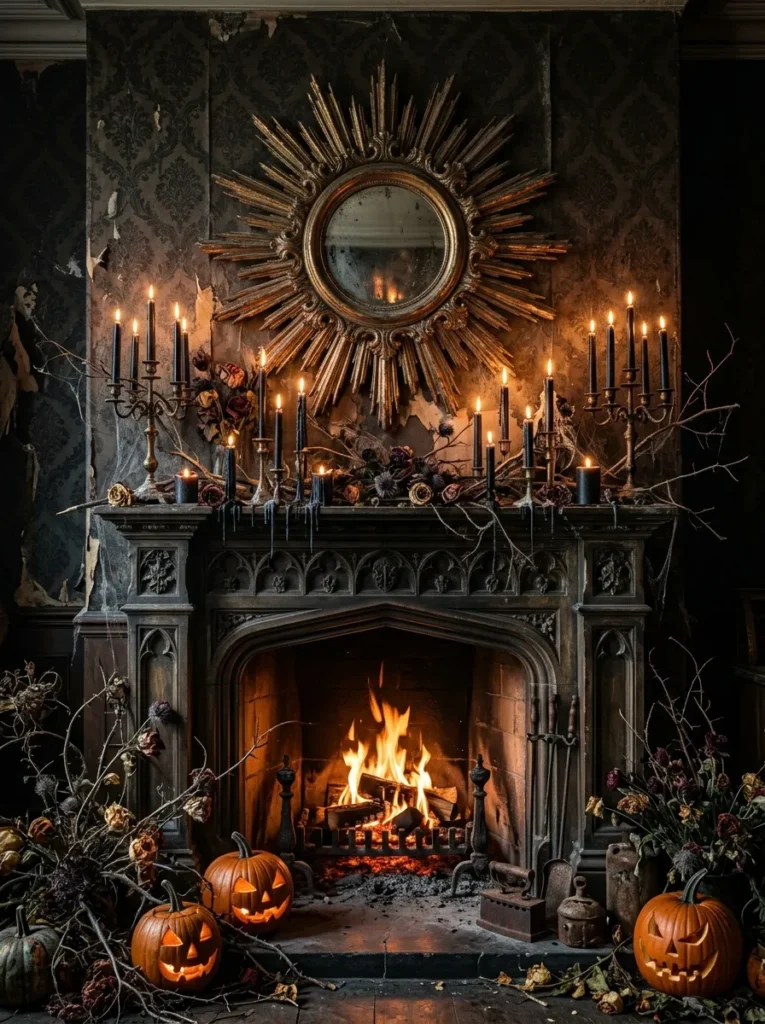
- Gilded brass radiating spokes
- Convex central fish eye lens
- Dynamic dimensional relief shadow
The Look and Technique:
Radiating brass or gilt metal rays draw attention toward the central hearth. The compact convex center gathers a miniature panoramic panorama of the entire living area in a single decorative focal point.
Best Suited For:
Formal living rooms with shallow fireplaces that need vertical energy without overwhelming the chimney breast.
Pro Stylist Tip:
Dust intricate ray facets using an electrostatic microfiber wand to prevent dirt accumulation in detailed crevices.
5. Rattan Boho Trio
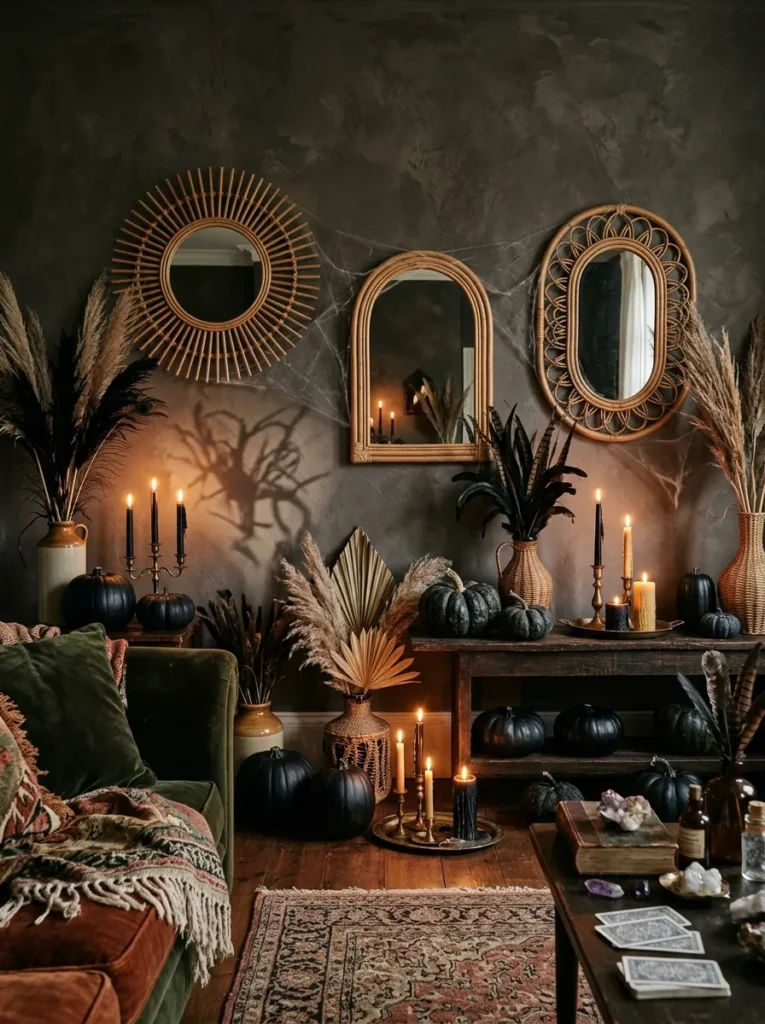
- Natural braided palm fibers
- Concentric woven textured rims
- Asymmetrical organic cluster grouping
The Look and Technique:
Woven plant fibers bring warmth to sterile apartment drywall. Hanging three staggered sizes establishes an organic rhythm that softens modern geometric furniture.
Best Suited For:
Sunlit breakfast nooks and breezy living areas featuring indoor tropical botanicals.
Pro Stylist Tip:
Mist dried rattan with diluted linseed oil once a year to prevent brittle cracking in dry winter air.
6. Mirrored Console Table
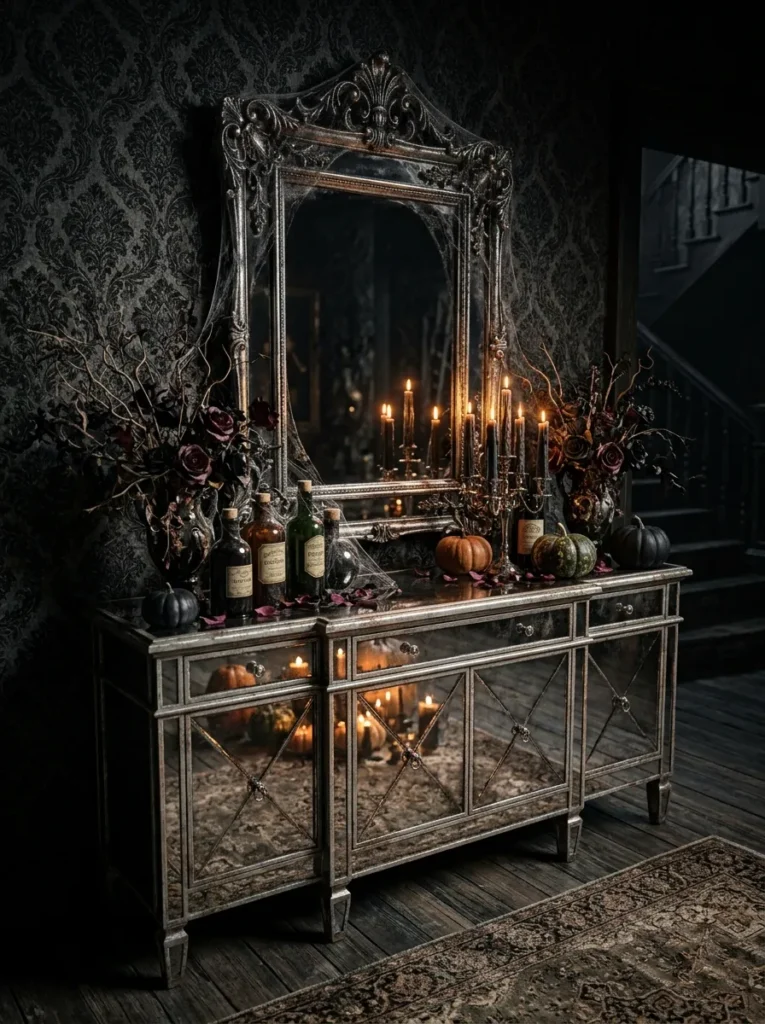
- Antiqued glass drawer fronts
- Faceted beveled crystal hardware
- Slim polished chrome framework
The Look and Technique:
Furniture fitted with mirrored planes dissolves its own physical footprint. Reflecting the carpet or wood floor underneath makes narrow entryways appear open and unencumbered.
Best Suited For:
Tight apartment entry hallways where solid wooden sideboards feel bulky and intrusive.
Pro Stylist Tip:
Coat mirrored tabletop glass with a water-repellent ceramic spray to minimize fingerprint smudges from daily keys.
7. Antique Gilded Frame
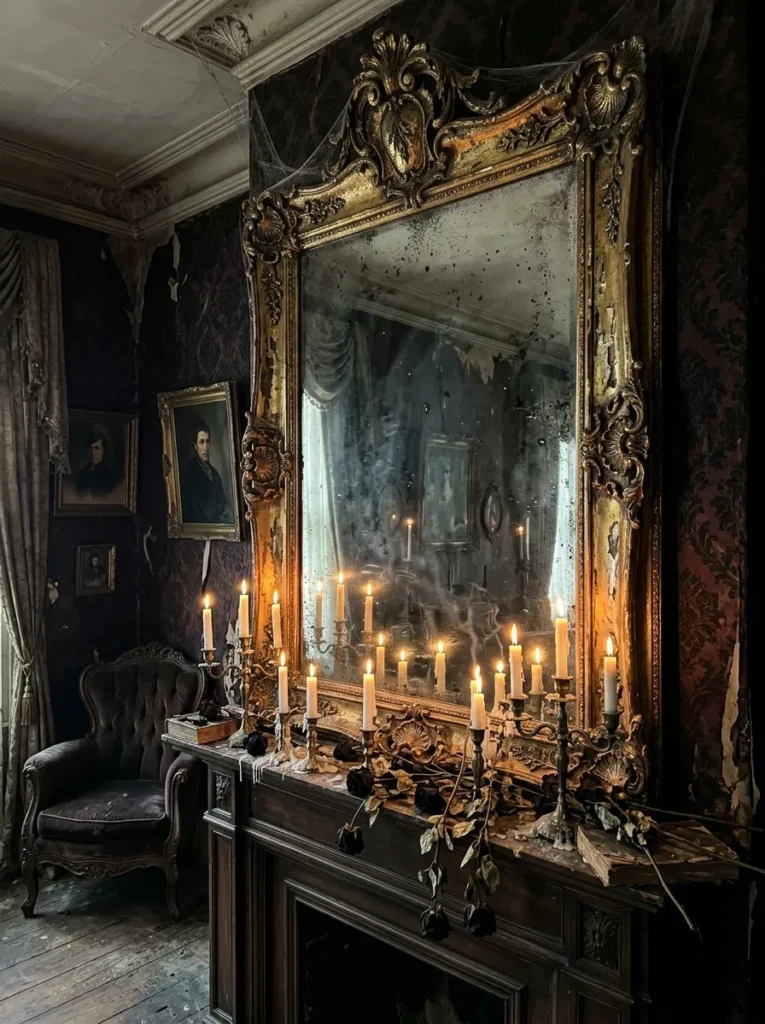
- Heavy baroque carved acanthus
- Distressed warm gold leaf
- Subtle aged glass silvering
The Look and Technique:
Heavy historic moldings introduce rich gravitas into stark contemporary layouts. The intentional pitting in aged silvering softens reflected light, creating a moody, atmospheric ambiance.
Best Suited For:
High-ceilinged rooms with minimalist furnishings needing rich historical contrast.
Pro Stylist Tip:
Preserve delicate crumbling gesso borders with conservation paste instead of abrasive modern wood cleaners.
8. Window Pane Style
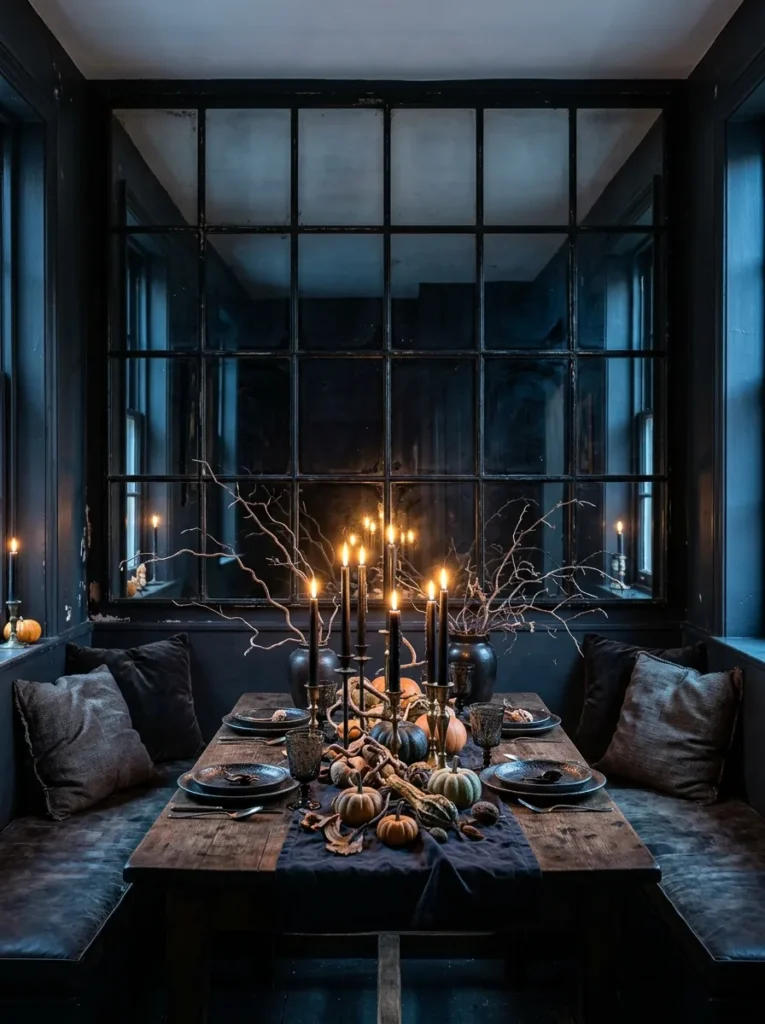
- Square divided light grid
- Industrial dark bronze mullions
- Mock casement outward facade
The Look and Technique:
Segmented panes mimic exterior window architecture. When placed on interior partition walls, the mind reads the piece as an exterior opening, instantly relieving claustrophobia.
Best Suited For:
Windowless basement suites or long, dark interior transition corridors.
Pro Stylist Tip:
Position directly across from a table lamp so the divided panes create a simulated sunny lantern glow at dusk.
9. Bathroom Pivot Oval
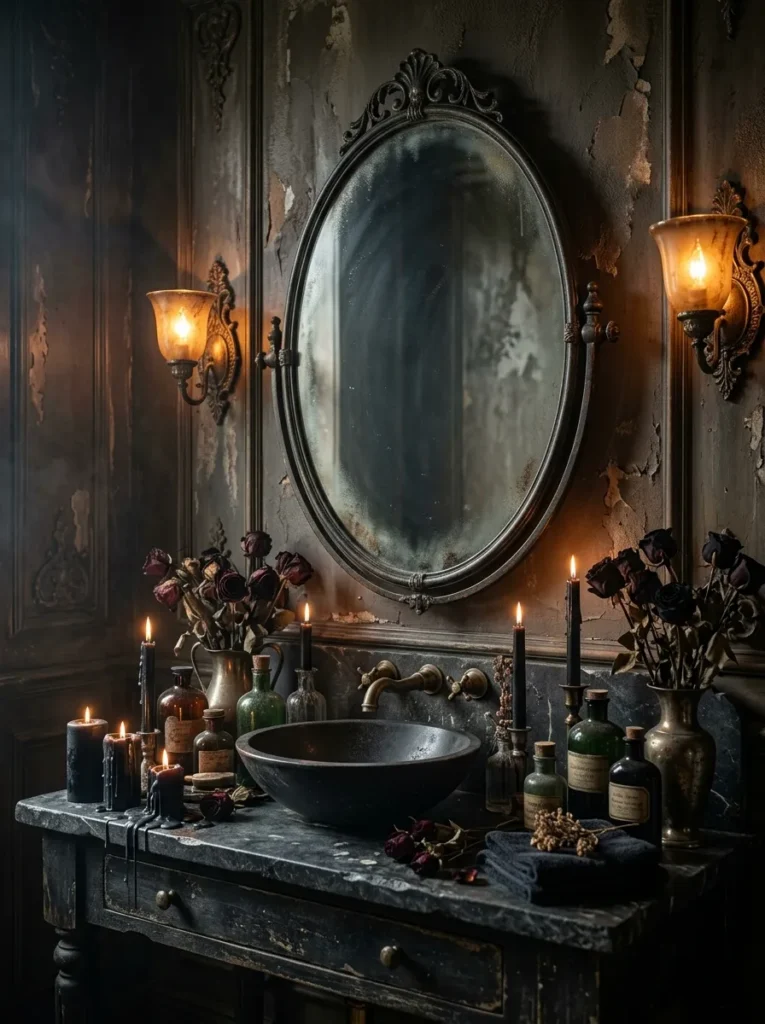
- Solid cast brass brackets
- Dual axis tilting mechanism
- Beveled frameless floating border
The Look and Technique:
Wall-mounted pivoting hardware allows the glass to float two inches proud of the tile. Tilting the glass adjusts for varying occupant heights while preserving clean tiled wall backdrops.
Best Suited For:
Powder rooms and shared family bathrooms requiring flexible vanity ergonomics.
Pro Stylist Tip:
Tighten bracket set screws with thread-locking fluid to maintain selected tilt angles permanently.
10. Hallway Light Bounce
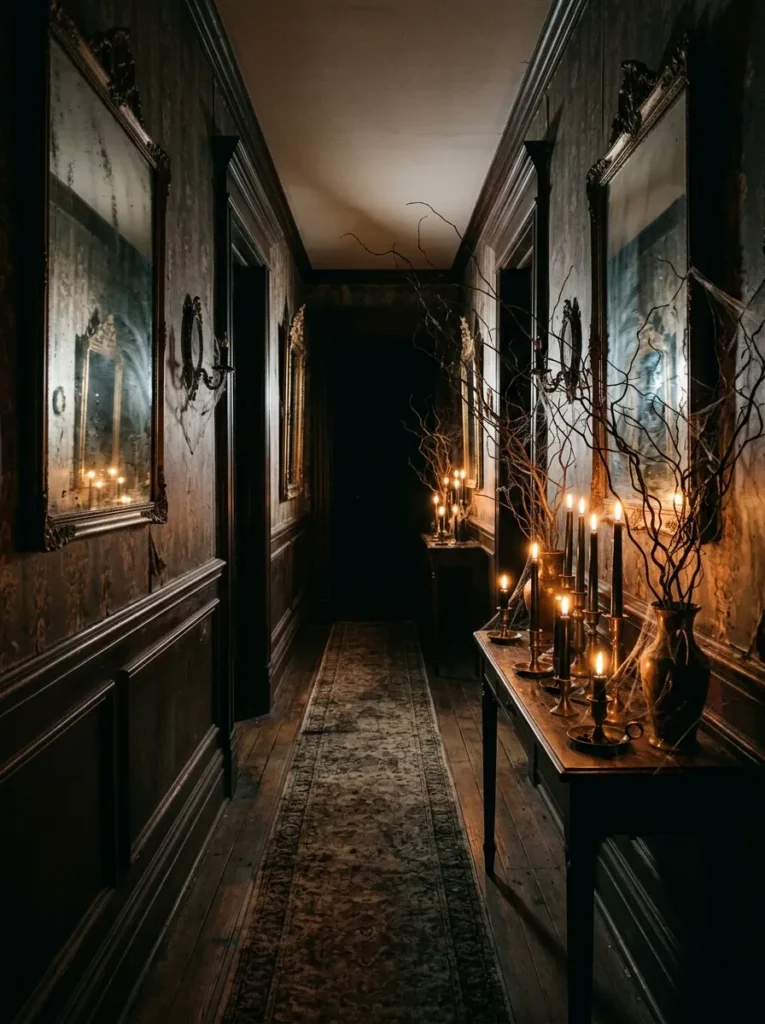
- Full height frameless slab
- Recessed edge flush mounting
- Direct doorway opposite placement
The Look and Technique:
Placing a mirror directly opposite an open bedroom or living room doorway pulls ambient daylight straight down gloomy corridors. It effectively turns dark interior shafts into illuminated pathways.
Best Suited For:
Narrow windowless central hallways in traditional closed-plan homes.
Pro Stylist Tip:
Clean high-traffic hallway glass using distilled water and vinegar to prevent cloudy alkaline film buildup.
11. Ceiling Panel Illusion
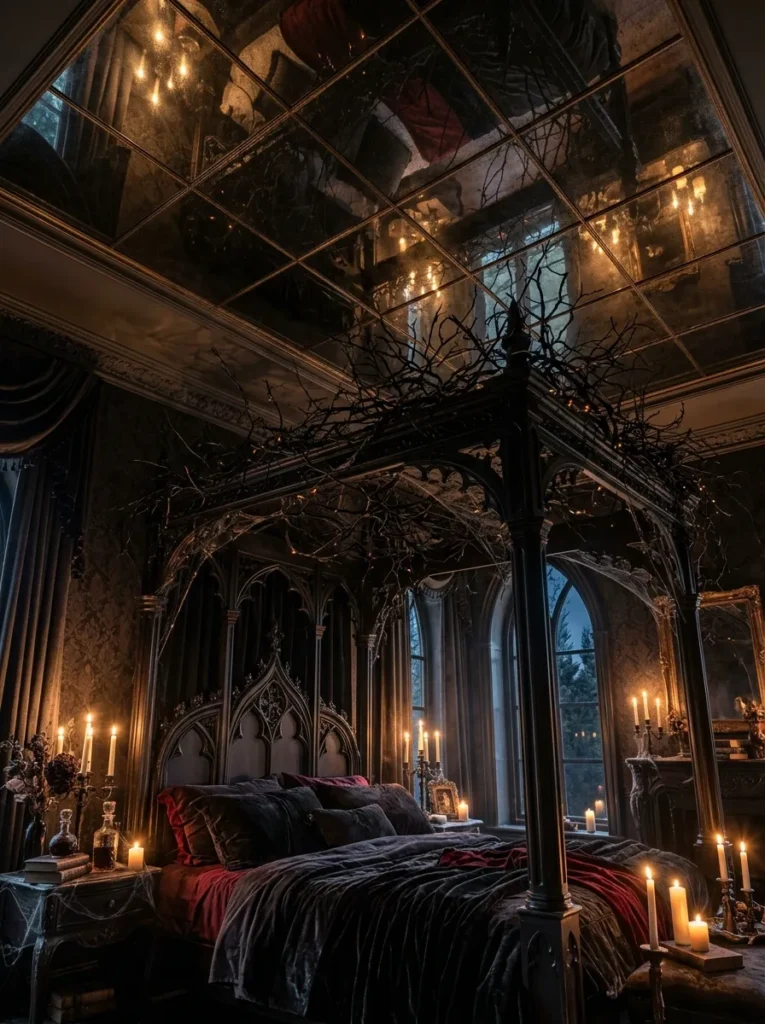
- Concealed perimeter cove frame
- Slight smoky tint glass
- Vertical upward reflected volume
The Look and Technique:
Mounting lightly tinted antique glass within ceiling tray recesses expands vertical perceived ceiling heights. It captures chandelier light without producing harsh blinding downward glare.
Best Suited For:
Formal dining spaces and home libraries with standard eight-foot ceiling limits.
Pro Stylist Tip:
Always utilize professional commercial J-channel mechanics and safety backing film for overhead glass installations.
12. Backsplash Tiles
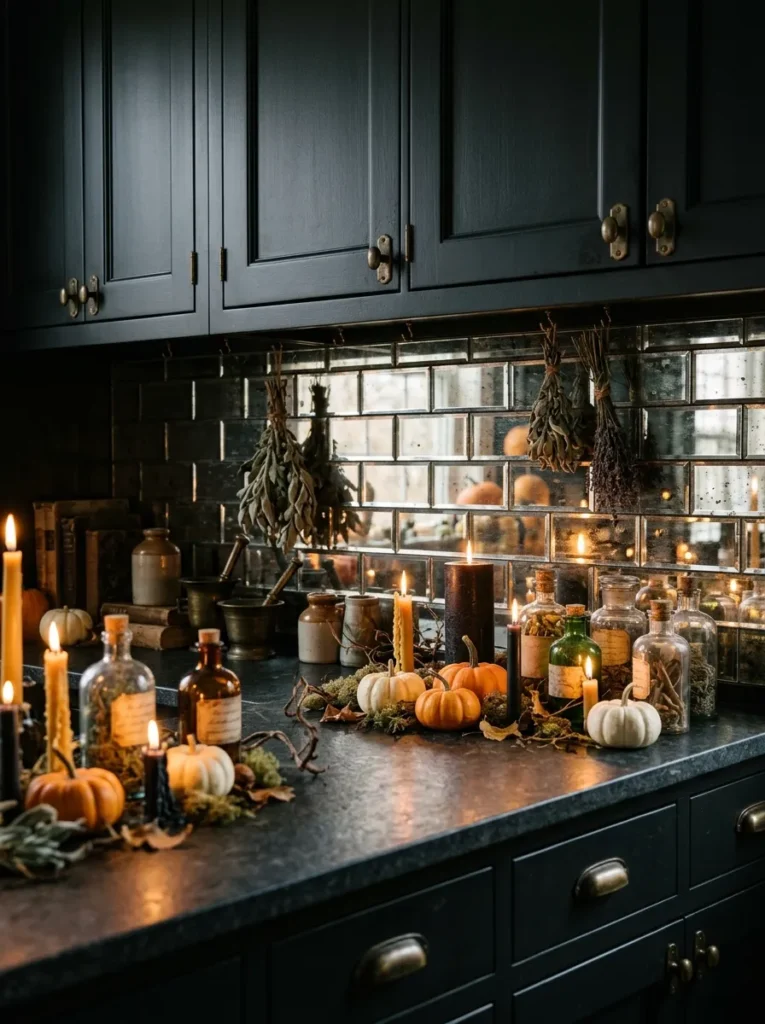
- Beveled subway glass tiles
- Smoked charcoal mirror finish
- Moisture resistant silicone grout
The Look and Technique:
Swapping glazed ceramic tiles for beveled mirror strips opens up cramped kitchen counter prep space. It reflects under-cabinet task lighting and keeps the cook visually connected to the wider room.
Best Suited For:
Galley kitchens and compact open-concept studio kitchenettes.
Pro Stylist Tip:
Specify heat-treated tempered glass tiles when installing directly behind active gas cooktop ranges.
13. Closet Door Inserts
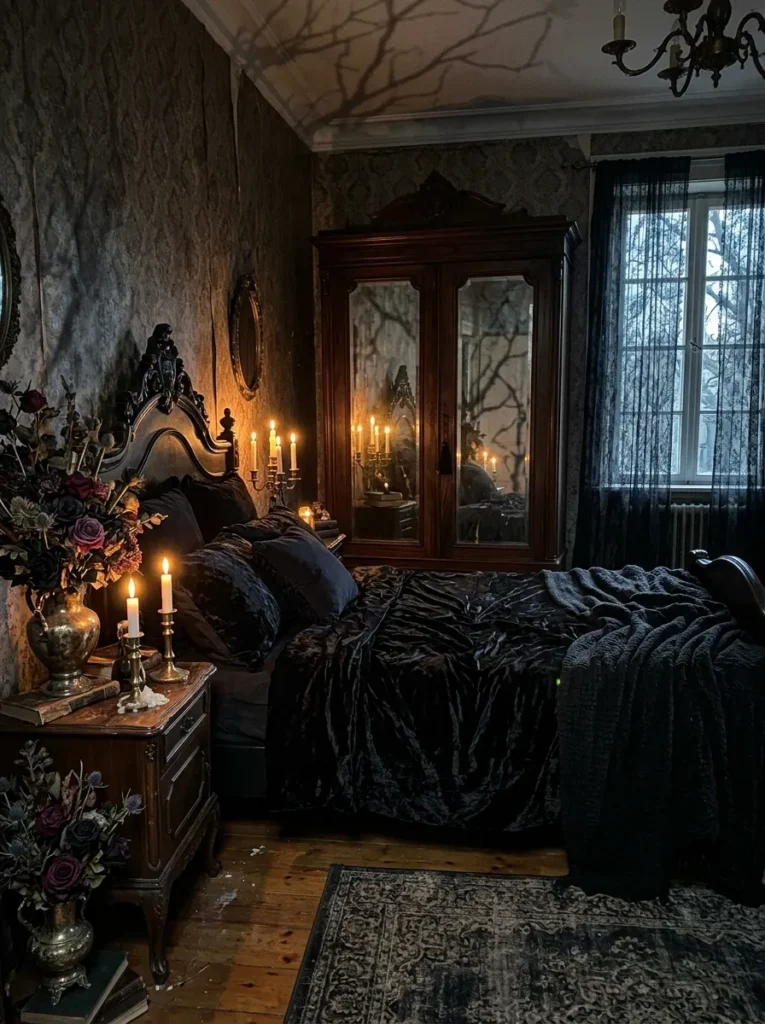
- Full length inset panels
- Shaker style perimeter framing
- Multi-angle dressing view
The Look and Technique:
Transforming flat hollow-core closet panels into mirrored surfaces turns bulky wardrobe walls into light-reflecting architecture. It completely eliminates the need for separate standalone dressing mirrors.
Best Suited For:
Compact dressing rooms and studio apartments with minimal open floor space.
Pro Stylist Tip:
Use neutral-cure mirror mastic adhesive to prevent silver backing degradation over time.
14. Vanity Hollywood Bulbs
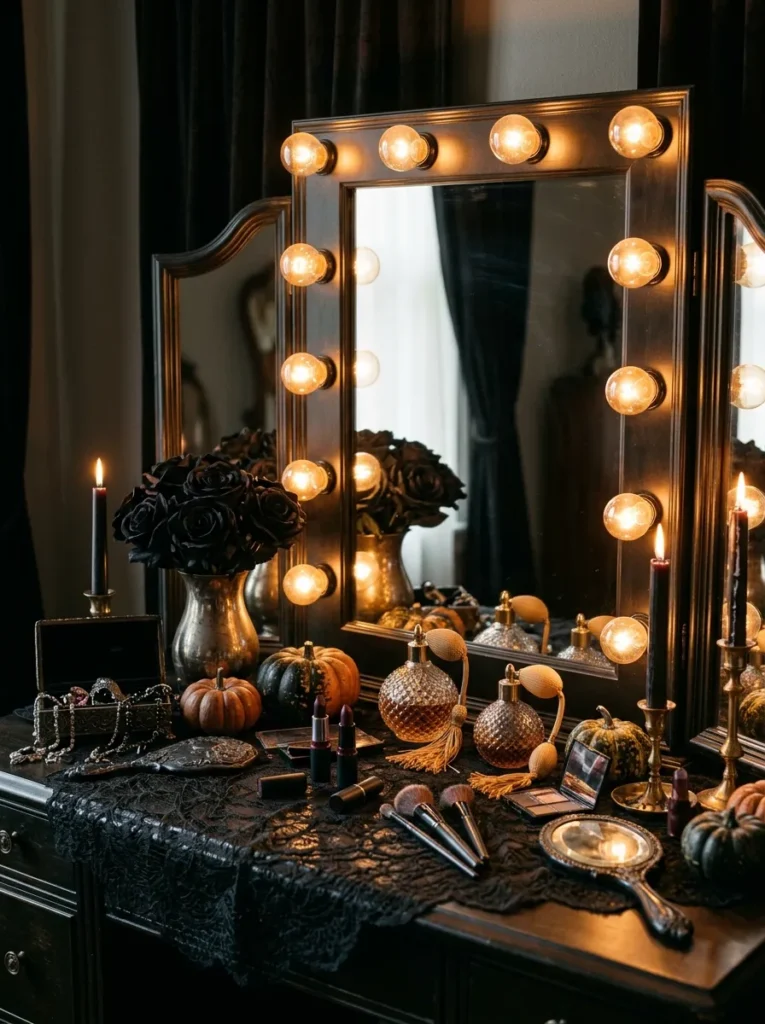
- Perimeter globe illumination array
- True color index lighting
- Sleek frameless center pane
The Look and Technique:
Surrounding clean glass with diffuse 2700K vanity globes eliminates unflattering shadows on the face while flooding small bedroom nooks with warm glow.
Best Suited For:
Dedicated makeup nooks and small ensuite dressing vanities.
Pro Stylist Tip:
Opt for frosted LED globes with a 90+ Color Rendering Index for accurate morning makeup application.
15. Round Bedside Pair
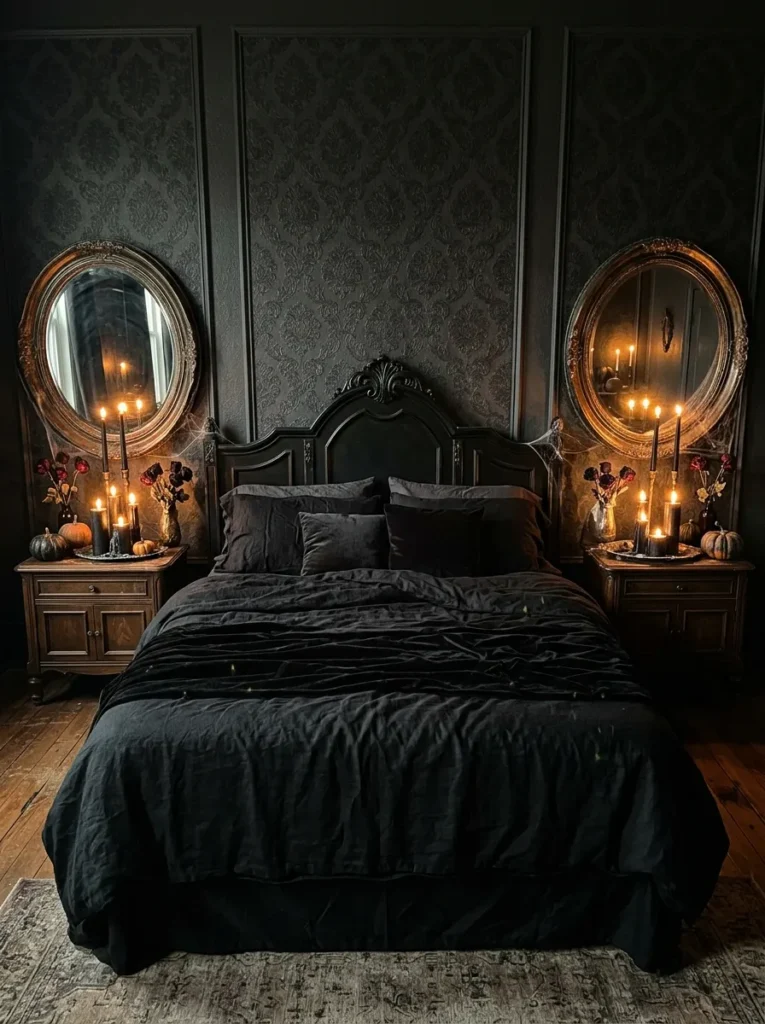
- Brushed champagne gold rims
- Twin symmetrical hanging layout
- Soft floating orb profile
The Look and Technique:
Hanging matching circular mirrors behind bedside lamps reflects soft shade light across sleeping pillows, doubling bedtime ambient glow without requiring bright overhead ceiling fixtures.
Best Suited For:
Master bedrooms with small bedside tables and limited natural morning illumination.
Pro Stylist Tip:
Hang the lower mirror curve precisely two inches above nightstand lampshades for proportional harmony.
16. Scalloped Edge Shape
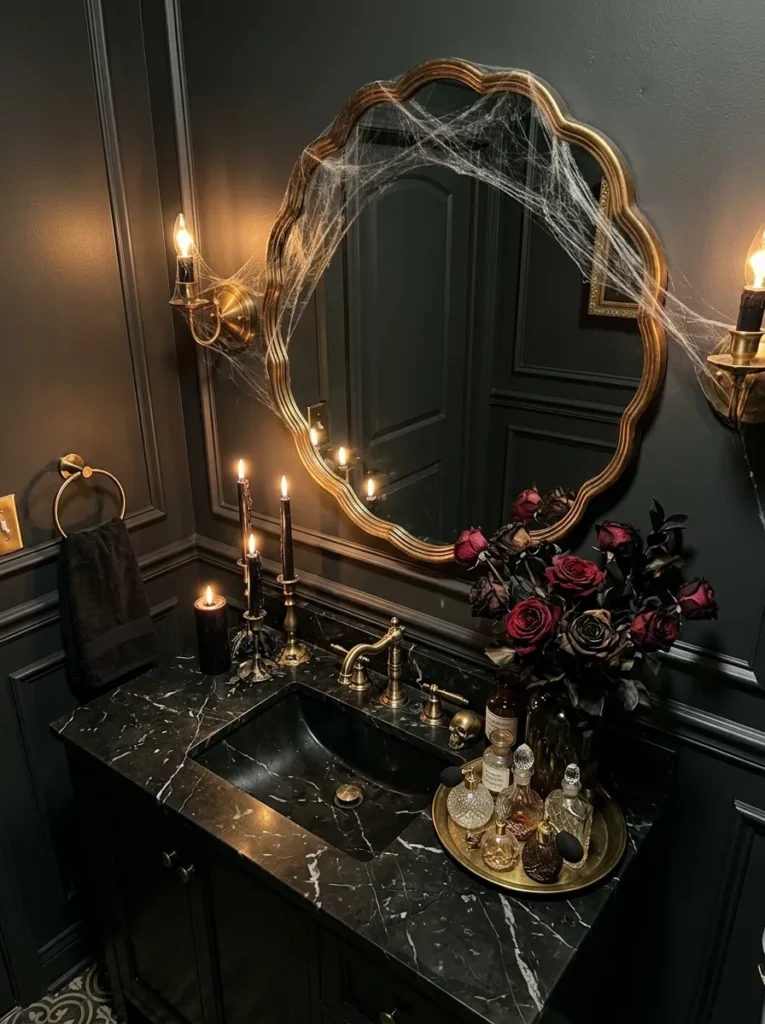
- Petal undulating perimeter border
- Polished pencil edge glass
- Whimsical bespoke silhouette
The Look and Technique:
Playful curved edges soften boxy furniture lines. The scalloped motif introduces tailored bespoke flair, bridging playful traditional charm and clean contemporary chic.
Best Suited For:
Playful guest powder rooms and creative home office spaces.
Pro Stylist Tip:
Pair with vertical striped wallpaper to establish sophisticated geometric tension between curves and lines.
17. Wavy Squiggle Outline
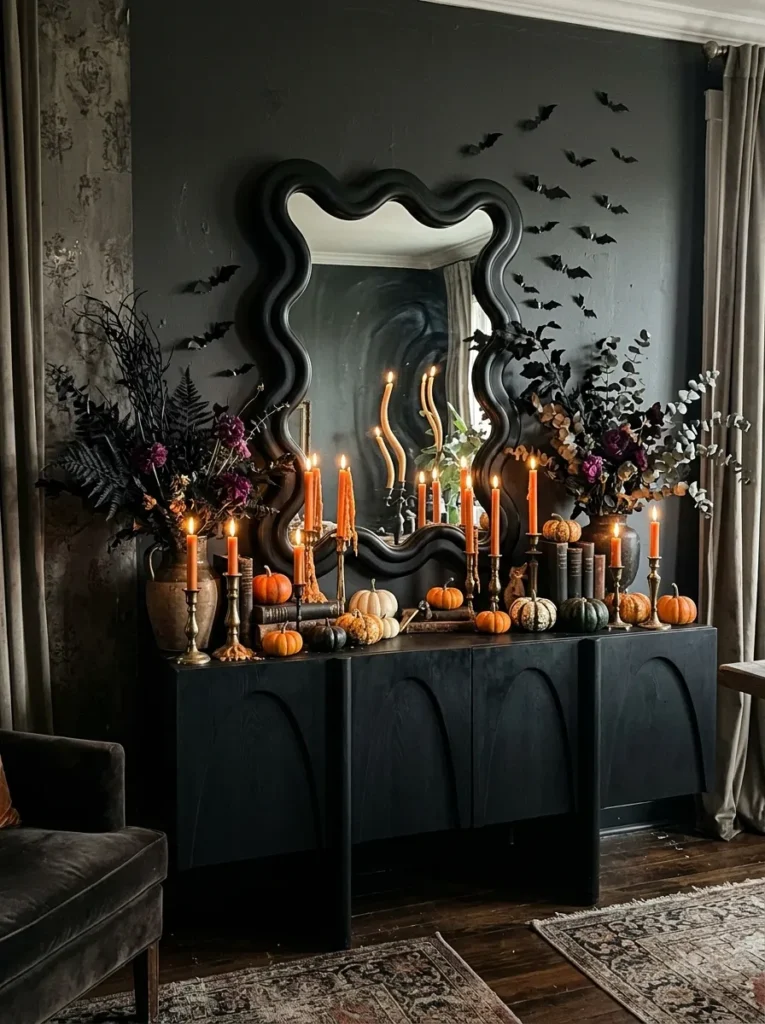
- Fluid organic freeform curve
- Colored matte lacquered frame
- Postmodern visual statement
The Look and Technique:
Freeform asymmetrical contours disrupt predictable grid patterns in modern decor. The sculptural silhouette functions as standalone wall art while providing practical reflective utility.
Best Suited For:
Eclectic living rooms and creative studio seating arrangements.
Pro Stylist Tip:
Leave twelve inches of clear perimeter space around the frame to let the sculptural silhouette breathe.
18. Shelf Behind Bar
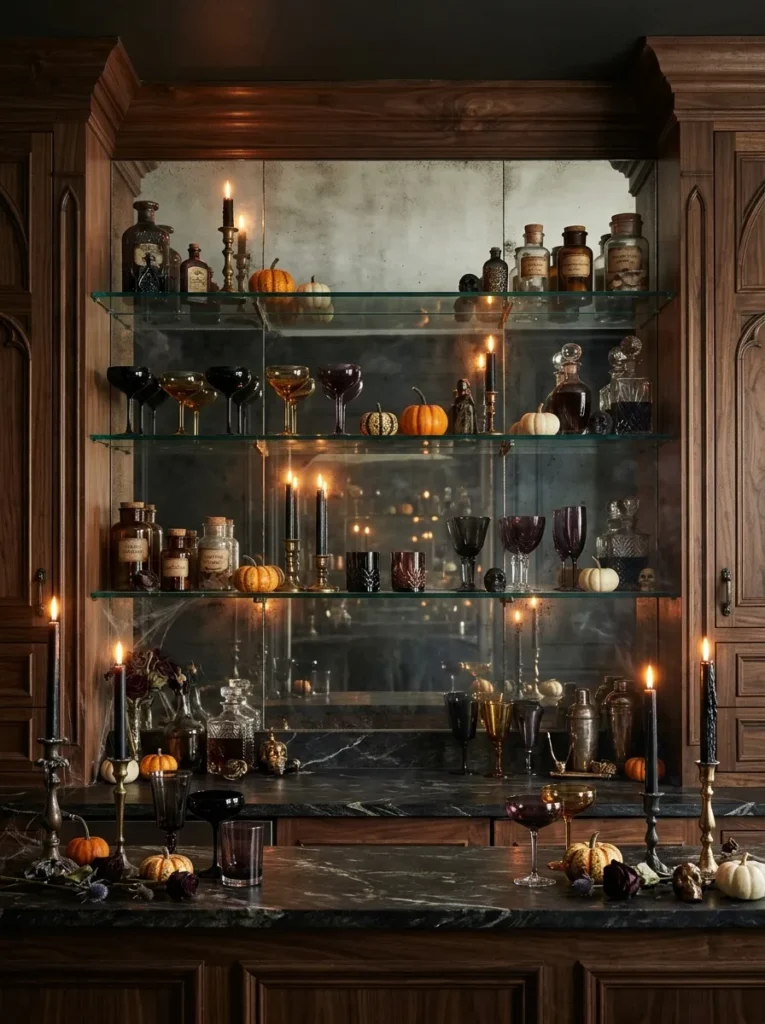
- Integrated glass back panel
- Polished brass liquor rails
- Amber liquid refraction glow
The Look and Technique:
Lining dry bar cubbies with antique mirror captures bottle reflections and glows warmly under puck lighting, giving compact liquor carts the feel of an upscale cocktail lounge.
Best Suited For:
Living room entertaining corners and dining room built-in hutches.
Pro Stylist Tip:
Wipe down mirrored shelves with dry microfiber immediately after drink preparation to avoid sticky cocktail rings.
19. Garden Fence Trick

- Weatherproofed exterior timber casing
- Simulated outdoor Gothic window
- Outdoor courtyard deep reflection
The Look and Technique:
Mounting exterior-rated mirrors on courtyard masonry walls reflects surrounding ferns and ivy, tricking guests into perceiving a hidden garden gate beyond the patio.
Best Suited For:
Tight urban terrace courtyards and small concrete balcony seating nooks.
Pro Stylist Tip:
Angle the glass slightly downward toward planting beds to prevent birds from flying into reflections.
20. Dining Room Feature
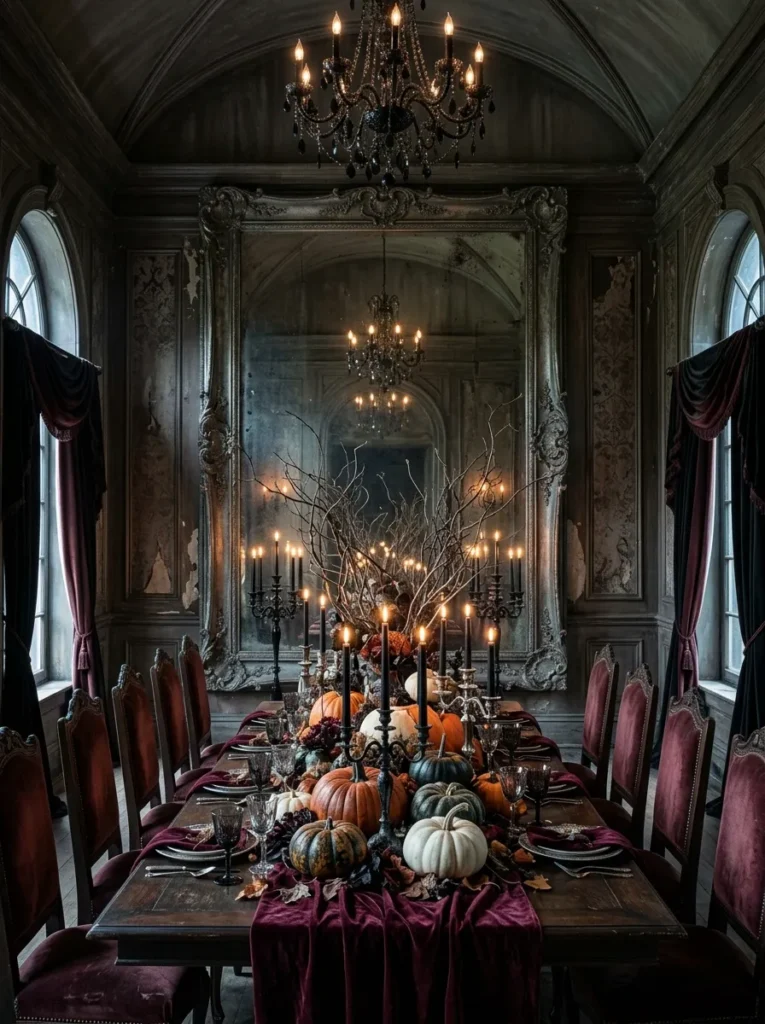
- Expansive multi-panel installation
- Aged mercury glass patina
- Low candlelit evening shimmer
The Look and Technique:
Covering a dining feature wall in antiqued glass panels doubles the sparkle of dinner party candles and crystal stemware, creating an atmospheric, celebratory backdrop.
Best Suited For:
Formal dining rooms that feel narrow or enclosed during evening gatherings.
Pro Stylist Tip:
Dim overhead chandeliers to 20% and use real taper candles to maximize flickering glass reflections.
21. Stair Landing Statement
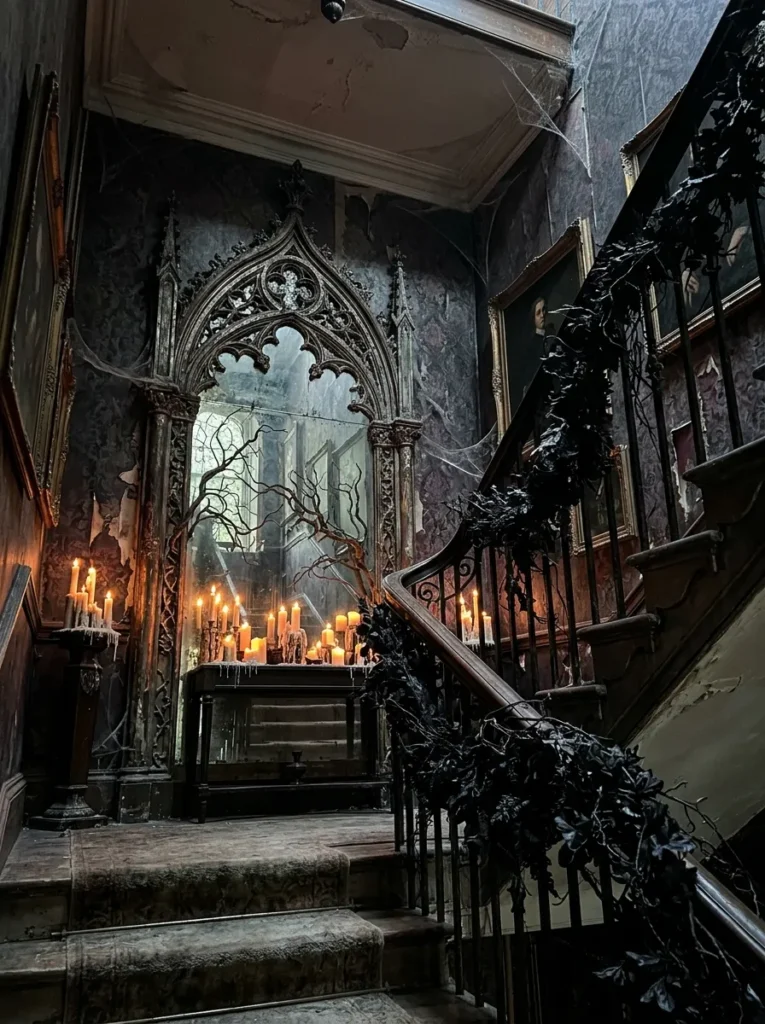
- Oversized architectural scale
- Deep shadow box iron reveal
- Vertical upward transition
The Look and Technique:
Stair turnarounds are notorious dead zones. A towering mirror on the mid-landing reflects light between floors and guides movement smoothly up the stairwell.
Best Suited For:
Multi-level homes with steep, enclosed central stairwells.
Pro Stylist Tip:
Secure bottom corners with concealed mounting brackets to prevent shifting from stair vibration.
22. Beveled Frameless Cluster
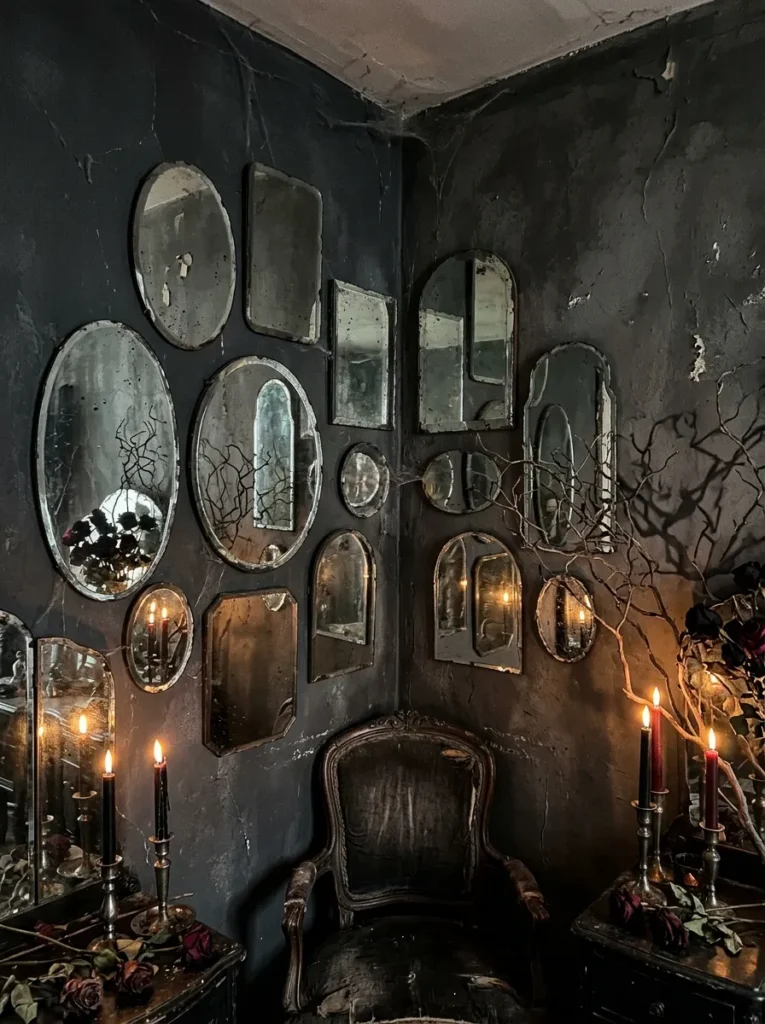
- Precision angled perimeter facets
- Geometric staggered placement
- Prismatic daylight dispersion
The Look and Technique:
Assembling multiple unframed beveled mirrors across an accent wall produces delicate prism rainbows when afternoon sunlight hits the angled glass edges.
Best Suited For:
Airy modern lofts and minimalist transitional living rooms.
Pro Stylist Tip:
Position across from southwest-facing windows to maximize dramatic late-day prism projections.
Comprehensive Pro Styling and Maintenance Guide
Selecting the right mirror involves balancing visual weight, structural hanging demands, and maintenance commitment. Consult this material comparison matrix before selecting mirrors for your layout.
| Frame Construction | Optical Impact | Ideal Placement | Weight Rating | Care Requirement |
|---|---|---|---|---|
| Blackened Steel & Iron | Clean architectural lines | Entryways & hallways | Heavy (15 to 40 lbs) | Rust preventive wax |
| Antique Gesso & Gold Leaf | Warm historical depth | Mantels & dining rooms | Moderate (10 to 25 lbs) | Soft dry camelhair dusting |
| Natural Rattan & Cane | Soft organic warmth | Bedrooms & sunrooms | Light (3 to 8 lbs) | Annual linseed hydration |
| Frameless Beveled Glass | Prismatic modern reflection | Feature walls & vanities | Moderate (8 to 20 lbs) | Ammonia-free glass polish |
| Cast Brass & Bronze | Luminous candlelit glow | Powder rooms & bars | Heavy (12 to 30 lbs) | Microcrystalline polish |
Precision Hanging Checklist
- Map the Reflected Horizon: Stand at primary entry doorways to confirm the mirror reflects scenic artwork or daylight rather than utility doors or clutter.
- Locate Solid Wall Framing: For pieces exceeding fifteen pounds, drive heavy-duty mounting screws directly into wooden studs rather than relying solely on drywall anchors.
- Establish the Sixty-Inch Rule: Center the focal midpoint of the glass sixty inches above finished flooring to match standard standing eye level.
- Dampen Frame Vibration: Adhere clear silicone bumper pads to bottom frame corners to preserve wall paint and stop rattling when interior doors close.
Frequently Asked Questions
Where should you avoid hanging mirrors in a small home?
Avoid positioning mirrors directly facing unmade beds, busy kitchen trash cans, or cluttered desk workstations. Doubling disorganization visually shrinks room perceived size and creates subconscious psychological stress.
How big should a mirror be relative to the furniture underneath it?
A mirror mounted above consoles, sofas, or mantels should measure approximately two-thirds to three-quarters the total width of the furniture piece below. Undersized mirrors appear adrift, while oversized pieces make underlying furniture feel fragile.
Can leaning floor mirrors safely rest without wall attachment?
No floor mirror should ever stand unanchored, particularly in homes with children or pets. Always tether the upper back rail to wall studs using heavy-duty anti-tip safety cables hidden discreetly behind the frame.
What is the best way to clean antique mercury glass without ruining the patina?
Never spray liquid glass cleaners directly onto antique mirror surfaces, as moisture can seep behind the silvering and cause black edge rot. Dampen a lint-free microfiber cloth with distilled water and wipe gently in concentric circles.
Does hanging multiple mirrors in one room look chaotic?
Multiple mirrors work beautifully when unified by consistent frame finishes or disciplined architectural grid spacing. Varying frame styles, heights, and shapes randomly in small rooms can disorient visitors and fracture visual harmony.
Final Editorial Verdict and Styling Recommendation
Mirrors remain the single most versatile architectural tool for transforming tight spatial confines. Rather than scattering random decorative accents across your walls, invest in substantial pieces that actively direct ambient illumination.
Prioritize scale and intentional sightlines above ornate decoration. When calibrated with precision, a single well-placed mirror dissolves room limits and fills compact spaces with expansive, airy daylight.
Visit nashradecor for more details.